
Loading...
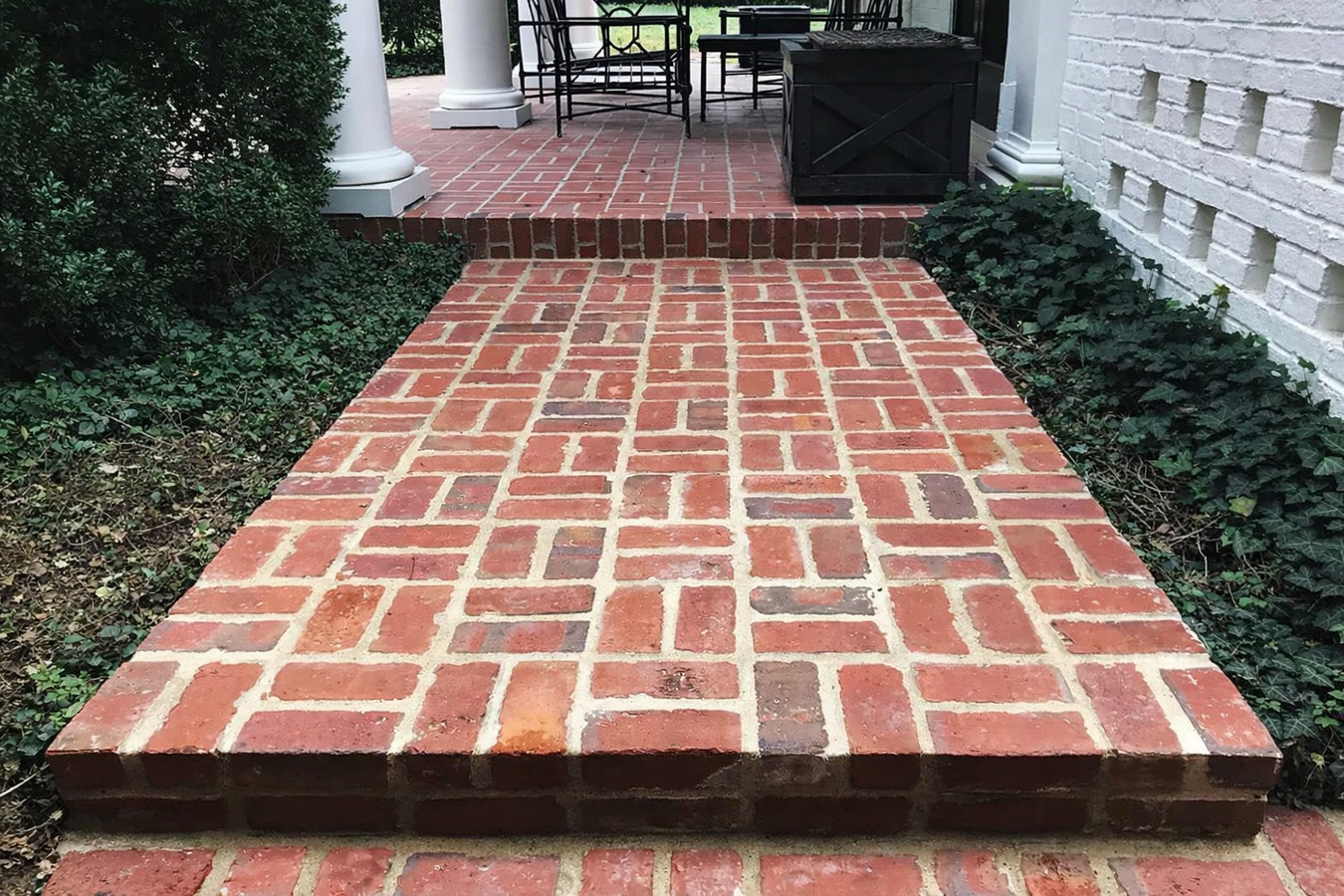
Cracked, heaving, or missing walkways are more than an eyesore - they are a trip hazard and a sign the ground underneath needs attention. We build concrete, brick, and paver walkways on a properly prepared base so they stay flat and intact through Pomona's shifting clay soil and seasonal rain.
Walkway construction in Pomona means removing what is there now, preparing the ground underneath with a compacted gravel base, and laying the new surface material - most residential projects take one to three days of active work, depending on size and material. The base preparation is the part homeowners rarely see but it is what determines whether the walkway stays flat for decades or starts cracking and heaving within a few years.
Many Pomona homeowners reach out after noticing cracks that are getting wider, edges that are starting to lift, or puddles that linger on the surface after rain. Those are all signs the ground underneath has shifted - common in this area because of the clay-heavy soil that swells in winter and shrinks in summer. If your property also needs a new driveway or parking surface, our driveway pavers service can be scoped at the same time to keep the look consistent and share mobilization costs.
If you notice cracks that have grown since you first spotted them, the ground underneath is moving - not just normal surface aging. Pomona's clay soil expands and contracts with the wet and dry seasons, and that movement will keep widening cracks over time unless the base is properly addressed. A crack wide enough to fit a pencil is usually past the point where patching alone will hold.
When one section of a walkway sits higher or lower than the one next to it, it creates a trip hazard. This is especially common in Pomona neighborhoods where the soil dries significantly in summer and then absorbs water quickly during winter rains. A raised edge of even half an inch is enough to catch a foot and cause a fall.
A walkway that holds puddles instead of draining them is either settling unevenly or was never sloped correctly in the first place. Standing water accelerates surface deterioration and makes the path slippery. If wet patches linger for hours after a rain, the drainage is not working the way it should.
If the top layer of your concrete walkway is peeling off in thin chips or the surface feels rough and pitted underfoot, the concrete has started to break down from the inside out. This kind of deterioration is common on older Pomona homes where the original concrete was mixed or cured in ways that do not hold up well over decades. Once it starts flaking, it tends to accelerate quickly.
We build walkways from the ground up - starting with demolition of whatever is there now, hauling it away, excavating to the right depth, compacting the soil, and laying a gravel base before any surface material goes down. For poured concrete, we cut control joints to guide any future cracking into predictable places rather than random ones, and we take extra steps during Pomona's hot summer months to slow the curing process so the surface does not crack before it hardens. Every job is sloped slightly to drain water away from the path rather than pooling on it. If the project connects to the public sidewalk, we pull any required permits from the City of Pomona's Building and Safety Division before work starts.
We also build brick wall installation for border walls, raised planters, and garden edges that can be designed alongside a new walkway for a cohesive look. The Brick Industry Association sets technical standards for brick and paver installation that our work follows, which means the same specifications inspectors and engineers use.
Suited to homeowners who want a durable, cost-effective path with a clean, uniform appearance and low long-term maintenance.
Ideal for homeowners who want a traditional or decorative look, with the added benefit that individual pieces can be reset if the ground shifts.
Best for homeowners who want a premium, distinctive look and are comfortable with the higher material cost and occasional resealing.
A significant portion of Pomona's residential neighborhoods were built in the 1950s through 1970s, and many original walkways are still in place. Concrete from that era often lacks the reinforcement and base preparation that modern work includes, which means replacement - not patching - is frequently the right call. Pomona also sits on clay-heavy soils that swell when wet and shrink when dry, a cycle that is hard on any surface that was not built to handle it. The American Concrete Institute recommends compacted gravel bases and properly cut control joints as the standard approach for exactly this kind of soil - and that is what we build on every project.
We work on homes throughout the region. Homeowners in San Dimas and La Verne deal with the same soil conditions and seasonal weather patterns as Pomona, and the base preparation we bring to every job is the same regardless of which neighborhood we are in.
We respond within 1 business day. Tell us roughly how long the walkway is, what material you are thinking about, and whether there is an existing path to remove. We will schedule a free on-site visit with no commitment required.
We come to your property, measure the area, look at the existing ground conditions, and talk through your options for materials and layout. This is your chance to ask about drainage, permits, and timeline. A written estimate follows within a day or two.
If your project requires a permit from the City of Pomona - most likely if the walkway connects to the public sidewalk - we handle the application. Permit approval typically adds a few days to a couple of weeks. You should not have to manage any of that yourself.
We remove the old walkway material, haul it away, excavate to the right depth, and compact a gravel base - the step that determines how long everything lasts. Then we install the surface, cut control joints if applicable, and cordon off the area so it can cure properly before foot traffic.
We come to your property, look at the site, and give you a written quote with no pressure - so you can compare clearly and decide with confidence.
Most walkway failures in this area trace back to skipped or rushed base work - not the surface material. We excavate, compact the soil, and lay a proper gravel base on every project, because that is what keeps a walkway flat through Pomona's seasonal soil movement. We do not skip this step to save time.
If your walkway connects to the public sidewalk, the City of Pomona requires a permit - and we handle the application, coordination, and any required inspection on your behalf. Your finished path will be on record as built correctly, which protects you at resale and avoids any issues with your homeowner's insurance.
Pomona summers regularly push past 95 degrees Fahrenheit, which pulls moisture out of fresh concrete faster than it should cure. We schedule pours for early morning during hot months, take steps to slow the drying process, and cover fresh concrete when needed. The Mason Contractors Association of America recommends these hot-weather practices as standard, and we follow them on every summer project.
Demolition and construction are messy. Old concrete gets removed and hauled away, the surrounding area gets tidied up, and you are not left managing the aftermath. We do a final walkthrough with you before we pack up so you can point out anything that needs attention while the crew is still on-site.
Pomona's soil and climate make walkway base preparation more important here than in many other cities. We build every project on that foundation - and we back the work with a written estimate, clear timeline, and a final walkthrough so you know exactly what was done and why.
Brick border walls and raised planters that pair naturally with a new walkway for a finished, cohesive yard.
Learn MorePaver driveways that can be matched to a new walkway material for a consistent look from street to front door.
Learn MorePomona's rainy season makes damaged walkways worse fast - call or request a free estimate now and get on the schedule before the next wet weather arrives.